
Transport mode cannot be selected
Manufacturer-specific procedures or loading aids may be necessary to avoid rolling powered wheels.
Electric vehicles do not all follow the same towing rules. Wheel rotation during towing can damage a drivetrain or create other risks. The specific manufacturer’s recovery manual takes priority.
General guidance, not a replacement for qualified diagnosis or official instructions.
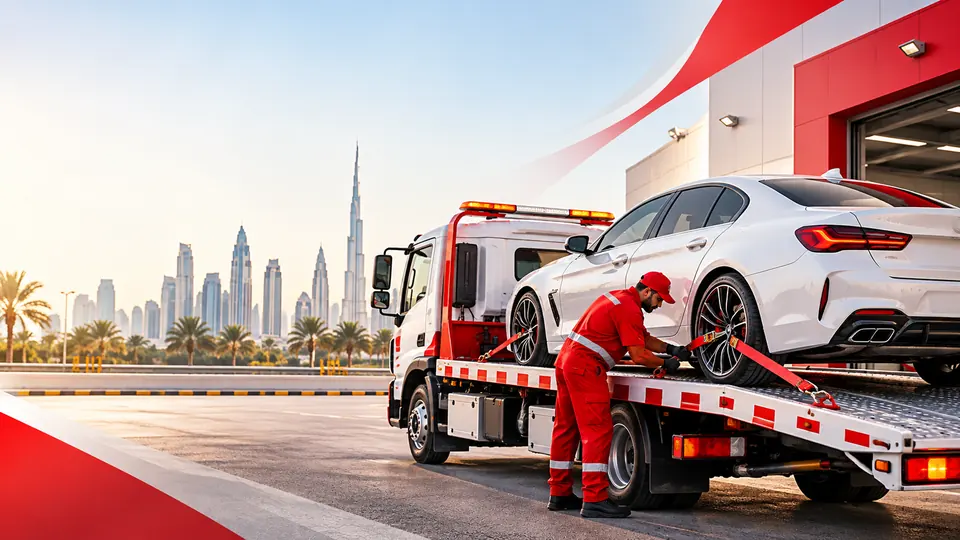
Electric vehicles do not all follow the same towing rules. Wheel rotation during towing can damage a drivetrain or create other risks. The specific manufacturer’s recovery manual takes priority.
Many EV models require their drive wheels lifted or a special transport procedure. There is no universal permission to tow electric or hybrid vehicles on their wheels. Refer to the exact model instructions and a trained operator.
Loss of 12V power or an inability to release park can complicate loading. Never handle high-voltage components or the battery underbody without suitable qualifications.
Manufacturer-specific procedures or loading aids may be necessary to avoid rolling powered wheels.
The high-voltage battery system may need specialist assessment and isolation precautions.
Charge level does not establish towing compatibility or a safe procedure.
The ramp angle and approved tie-down points need careful assessment.
Locate the owner or recovery manual instructions when available.
Describe warning messages, possible battery damage and park or brake status.
Provide entry-height and approach photos, especially for low vehicles.
Verify load rating, approved restraints and manufacturer wheel-rotation limits.
May violate the manufacturer’s instructions and damage drivetrain components.
Can damage the underbody and battery enclosures.
Requires qualified people, equipment and safety procedures.
Give the transporter model details, wheel condition and the recovery manual where possible. Agree on the loading and restraint method; a vehicle with a damaged battery may require specialist handling.
EV transport does not always mean a crane is needed. Lifting depends on weight, clearance, access and actual damage, and should be selected after assessment.
Share a precise pickup point, road direction and destination, including restricted access or parking details.
Provide vehicle type, model year, warnings and whether the transmission, brakes and wheels can move.
Mention leaks, collision damage, heat or electrical hazards; do not enter danger zones for photos.
Agree on equipment, availability, price and scope before dispatch.
No. Rules vary widely by model and must be checked.
It may be appropriate for many cases, but follow the specific manufacturer recovery instructions.
Avoid handling damaged components and seek qualified high-voltage expertise.
After securing the scene, share your vehicle details, location and safe photos to check transport equipment and pricing where available.