
Injuries or leaking fuel
Immediate professional response and a protected scene take priority over loading.
People and official emergency procedures come before towing after a collision. For injuries, fire hazards or dangerous road obstruction, contact the appropriate authorities before considering vehicle removal.
General guidance, not a replacement for qualified diagnosis or official instructions.
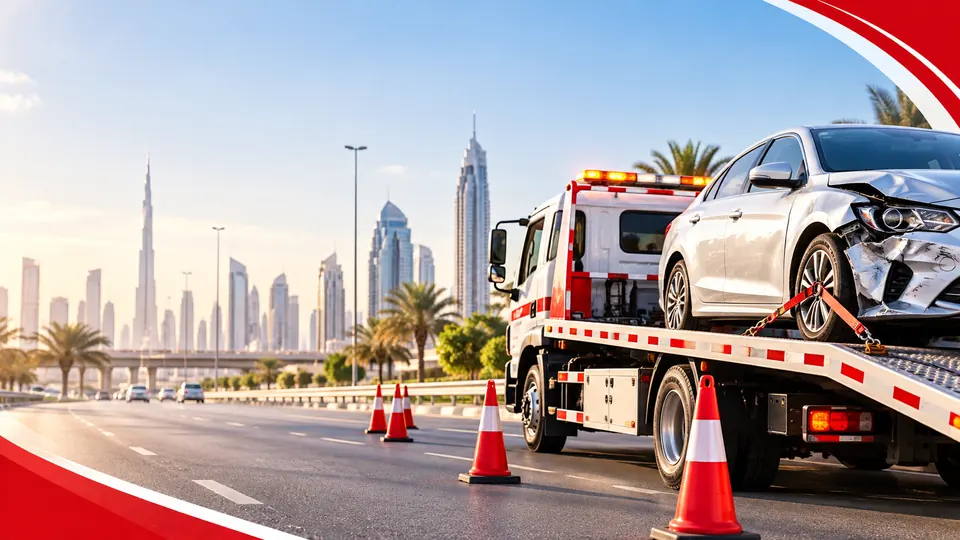
People and official emergency procedures come before towing after a collision. For injuries, fire hazards or dangerous road obstruction, contact the appropriate authorities before considering vehicle removal.
Do not move injured people except as advised by emergency responders, and avoid entering an unsafe crash scene to take photos. Reporting and removal procedures depend on the road and local authorities.
Once it is appropriate to handle the car, record its condition safely and discuss glass, suspension, wheels and destination with the carrier. A damaged car may not be suitable for ordinary towing.
Immediate professional response and a protected scene take priority over loading.
Specialised loading may be needed when the vehicle cannot roll normally.
Avoid high-voltage components and orange cables; seek qualified assistance.
Follow road-authority instructions and do not interfere with emergency operations.
Call appropriate emergency services for injuries or serious hazards.
Use the process applicable to the emirate and location; keep reference details.
Photograph visible damage if permitted and record who is taking custody.
Report locked wheels, leaks, broken glass and the intended destination.
Can worsen damage when tyres, steering or suspension have failed.
Can complicate recovery and insurance-related processes.
Requires trained personnel and manufacturer-specific procedures.
After official scene requirements have been met, equipment must match weight, damage and access restrictions. Discuss gearbox release, parking brakes and garage height where relevant.
Confirm an agreed destination with the owner or insurer and clarify the service quote before transport. A nearby transporter is not automatically authorised to take the vehicle.
Share a precise pickup point, road direction and destination, including restricted access or parking details.
Provide vehicle type, model year, warnings and whether the transmission, brakes and wheels can move.
Mention leaks, collision damage, heat or electrical hazards; do not enter danger zones for photos.
Agree on equipment, availability, price and scope before dispatch.
Follow local authority instructions; permission depends on the incident and location.
Not necessarily: wheel, structural and site damage can require specialist recovery.
Yes when safe and appropriate, without interfering with emergency operations.
After securing the scene, share your vehicle details, location and safe photos to check transport equipment and pricing where available.