
Overheating or low oil pressure
Ignoring severe warnings may damage the engine. Follow the vehicle manual, stop in a safe location and seek expert assistance rather than continuing blindly.
An overheating engine, damaged tyre or suddenly stalled car calls for a safety-first response. Protect people and avoid further damage before deciding whether the vehicle needs a flatbed or specialist help.
Educational guidance; suitability, pricing and availability depend on the vehicle and location.
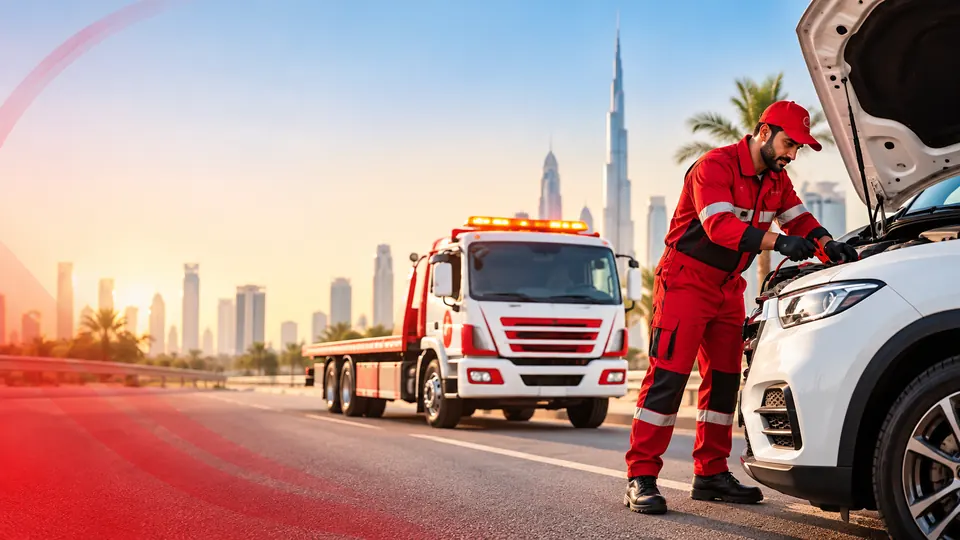
Follow local road authority and emergency-service instructions; circumstances vary.
Activate hazard lights and reach a permitted safe stopping area if the vehicle can move without creating further risk. Do not stop in a live lane to investigate.
Avoid standing beside moving traffic or attempting roadside repairs in a hazardous location. If there is immediate danger or injury, contact the appropriate official emergency services.
Steam or an overheating warning can indicate a burn hazard. Do not open a hot radiator or pressurised coolant cap.
Note the road, direction and nearest exit. Share an accurate map location once you are safe.
Ignoring severe warnings may damage the engine. Follow the vehicle manual, stop in a safe location and seek expert assistance rather than continuing blindly.
A failed tyre, impaired steering or brake response can make even a short drive dangerous.
Where there is a fire or hazardous fluid risk, move people away and contact official emergency responders when appropriate.
Some failures restrict ordinary towing. Explain whether the wheels, parking brake or transmission cannot be released.
When an on-site repair is unsafe or continued driving could damage the vehicle, transport may be appropriate. Manufacturer towing instructions, wheel condition, access and travel distance should guide the equipment decision.
Instead of saying only “my car will not start,” tell the provider whether the engine cranks, whether the vehicle can roll and whether an accident, leak or access restriction is involved. Only collect photographs when it is safe.
Possible causes vary, so a remote guess is unreliable. Avoid repeated starting attempts when warnings, smoke or burning smells are present.
Secure the vehicle; do not assume restarting is safe without considering any serious warning signs.
Electrical, fuel or mechanical causes are possible. A qualified diagnosis may be needed at a garage.
Accurate information helps the provider evaluate what equipment may be suitable.
Send map links for the current vehicle position and its intended garage or destination.
Give the make, model, visible damage, wheel condition and whether the transmission or parking brake is locked.
Show the surrounding road, parking entrance, ramp or sand surface where relevant. Only take photographs when safe.
Ask what the quoted work includes, the expected time, availability and any additional loading charges before confirming.
Do not ignore serious overheating warnings. Stop safely and follow your vehicle manual; never open a hot pressurised coolant cap.
Personal safety takes priority. Do not attempt work in an unsafe position near live traffic; seek appropriate roadside assistance.
That depends on the vehicle design, drivetrain, damage, wheel condition and manufacturer instructions.
No. Contact official emergency services for injuries, fire, immediate danger or other emergencies.
Send your exact pickup and drop-off locations, vehicle details, photos and any loading constraints so that suitable equipment, availability and costs can be discussed.