
Lowered sports and classic cars
Provide clearance, bumper and underbody photos along with any suspension modifications so the loading angle can be assessed.
Moving a vehicle to a workshop, dealership or another Emirate involves more than booking a time. Preparing condition photos, two locations and wheel or transmission information helps the carrier select appropriate equipment.
An informational checklist, not a service quote or promise of transport anywhere in the UAE.
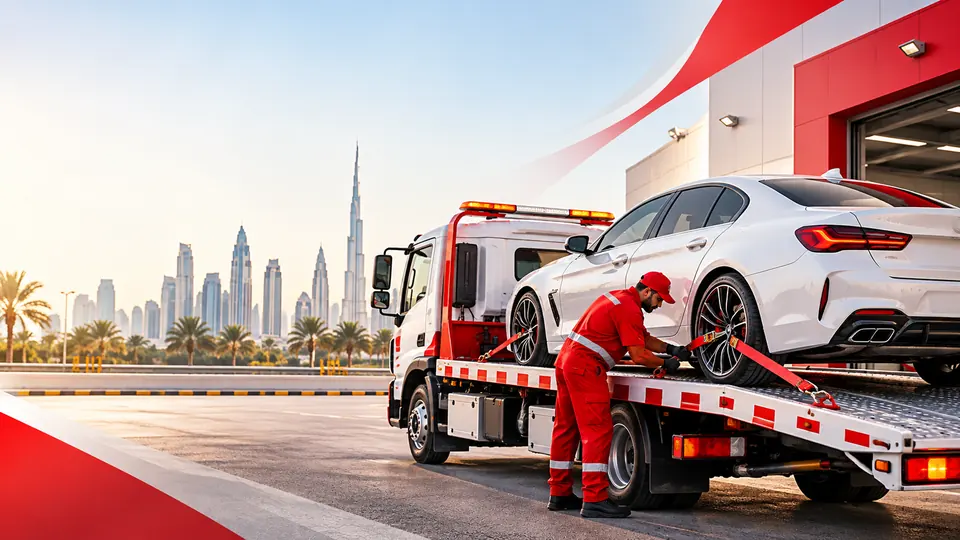
The condition and purpose of the trip matter more than the word “flatbed.”
A car may be mechanically sound and need showroom delivery, or completely immobile because its wheels or transmission are locked. Describe which applies rather than sending only the make and model. Collection hours and recipient contact information also prevent handover confusion.
Follow manufacturer instructions for towing, wheel movement and securement. Some EVs, all-wheel-drive cars and low sports vehicles require specific handling; simply booking a flatbed does not guarantee that every transporter is suitable.
If there is crash damage, leaking fluid or suspension failure, communicate it early. A scheduled transport carrier may need additional recovery equipment or may be unable to take the job.
Simple planning helps make the handover clear.
Share exact locations, recipient details, entrance directions and permitted collection windows.
Record each side of the vehicle and visible pre-existing damage when safe.
Mention locked brakes, non-rolling wheels, transmission issues, steering damage or leaks.
Confirm what the transport provider actually requires; only share sensitive paperwork through appropriate channels.
Understand loading, securing, unloading and any additional access fees or exceptional work.
Do not treat every model as having identical towing instructions.
Provide clearance, bumper and underbody photos along with any suspension modifications so the loading angle can be assessed.
Review the manufacturer’s transport mode, wheel restrictions and lifting instructions with an appropriately qualified professional.
Report broken glass, leaking fluids, locked wheels and suspension deformation. Special recovery may be required.
Check vehicle dimensions, gross weight and any added load to ensure transporter capacity and legal requirements are met.
Agree who is responsible for each stage.
Record visible condition and agreed key or accessory transfer, consistent with provider instructions.
Confirm delivery location and vehicle condition, noting any issues at the time of receipt.
Do not assume a service includes comprehensive insurance; review agreed terms and any limits before booking.
Missing information can result in equipment arriving that cannot load the vehicle.
An incorrect basement height, hidden wheel lock, absent key or inaccessible pickup bay can change the whole plan. Mention unusual constraints before accepting a quote, even when they appear minor.
Compare like-for-like offers: loading, unloading, travel distance and exceptional handling should be considered together. A simple local towing starting price cannot be assumed to apply to inter-Emirate movement.
A short, complete message is more useful than repeated calls.
Pickup, destination and accessible times.
Make, model, approximate dimensions and whether wheels and brakes can operate.
Entrance constraints, any damage and lowered ride height.
Confirm suitable equipment, the scope of work and total quote before dispatch.
What to confirm before the carrier arrives.
No. Weight, manufacturer guidance, clearance, loading and securement constraints all matter.
Photos can document its condition and improve the clarity of pickup and delivery records.
Never assume so. Ask what is included in the quote and what may incur extra charges.
It may require auxiliary handling tools or different equipment; disclose the condition in advance.
Share the vehicle location and its condition, destination and access information. Local service availability and pricing must be confirmed separately.