
Showroom, auction and workshop delivery
When a vehicle cannot be driven or has no registration plates, clarify ownership, collection permissions and any official transport requirements. Provide the recipient contact and permitted handover window.
Purchased a car that needs to be delivered, moving a vehicle to a workshop, or shipping a low-clearance car without driving it? We assess vehicle dimensions, condition, collection point and destination before suggesting equipment.
Pre-arranged vehicle delivery is separate from emergency roadside recovery and sand extraction. Each journey is quoted individually.
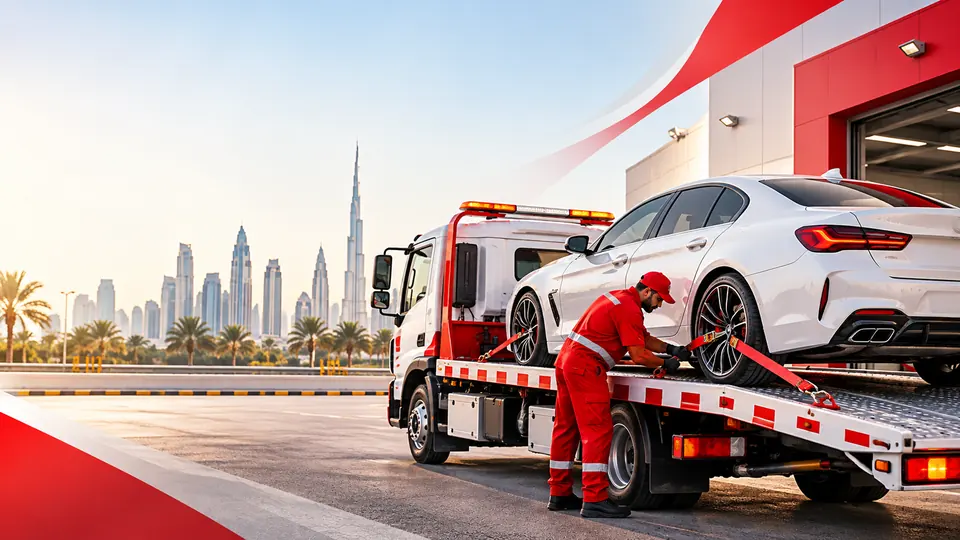
Planned vehicle delivery has different requirements from an urgent roadside breakdown.
Owners may need delivery from a showroom to a home, movement between garages, transport to an authorised service centre, or collection of a vehicle that cannot legally or safely be driven. Confirm pickup and drop-off addresses and whether the wheels, steering and parking brake can operate.
A classic, sports or electric car may need a different loading approach than a standard saloon. Ground clearance, weight, manufacturer towing instructions and tie-down locations matter as much as journey length. Do not assume that all flatbeds suit all vehicles.
A collision-damaged vehicle or a car stuck in sand can require recovery or repositioning before ordinary transport. Discuss those conditions in advance rather than treating them as a straightforward scheduled delivery.
Pictures and dimensions help distinguish a routine pickup from a specialised job.
When a vehicle cannot be driven or has no registration plates, clarify ownership, collection permissions and any official transport requirements. Provide the recipient contact and permitted handover window.
Low bumpers, vulnerable trim and special wheel finishes may require an appropriate loading angle and securement. Equipment suitability must be checked from the actual specifications and site pictures.
Follow the manufacturer transport procedure, including drivetrain and lifting restrictions. Wheel towing may be prohibited for certain models and conditions.
A locked transmission, damaged suspension or inoperative parking system can complicate loading. Describe the problem before arranging a transporter.
Gross vehicle weight, dimensions and height limits have to match available equipment and applicable permissions; unsuitable work should not be accepted.
Every route requires an actual pickup and destination, not a blanket price.
Collection may involve residential towers, showrooms or service facilities. Basement clearance and site access must be considered.
Al Rashidiya · Al Nuaimiya · Al Rawda · Al Jurf Industrial · Al Mowaihat
Moving between cities requires a confirmed recipient, handover time and any access restrictions at the final site.
Ajman to Sharjah · Ajman to Dubai
Other Emirates are priced after reviewing distance, capacity and vehicle condition rather than on a generalised local call-out price.
Ajman to Abu Dhabi · Ajman to Umm Al Quwain · Ajman to Ras Al Khaimah · Ajman to Fujairah
These steps help reduce delays and clarify the handover.
Provide collection and delivery points, contact names, booking windows and building access details.
Take clear photos of the vehicle and visible pre-existing damage when safe to do so.
Mention locked wheels, brakes, keys, gearbox restrictions, basement entry and other loading constraints.
Agree on the equipment, what is included, possible extra charges and who will receive the vehicle.
The AED 50 entry price advertised for certain simple local recovery jobs is not a long-distance transport tariff.
Collection and drop-off distance, equipment capacity and timing affect transport quotes. A standard rolling vehicle differs from a damaged car requiring auxiliary loading tools or access through a restricted site.
We request model, wheel condition, photos and two location pins before discussing a realistic quote. Confirm loading, securing, delivery and any possible additional work within the quoted scope.
A lower headline price is not automatically a better transport arrangement; verify equipment suitability and the total payable amount before commissioning a journey.
A clear record improves transparency for both parties.
Document pre-existing damage and the vehicle position before collection and after delivery where feasible.
Equipment, tie-down points and acceptable wheel movement differ between models; never rely on one universal method.
Vehicles with legal, registration or collection restrictions may need additional authorisation. Confirm requirements before accepting the job.
A complete first message prevents avoidable follow-up calls.
Include the Emirate, exact address and any unusual site entrance.
Explain whether steering, wheels, brake and transmission can function.
Send vehicle photos and entrance height if it is in an underground parking area.
Agree the rate and availability before equipment is dispatched.
Answers for planning a pickup.
Often this can be evaluated, but the wheels, brake, transmission and site access may require additional loading equipment.
No. The amount is an entry price for some simple local recovery requests, not a rate for inter-Emirate transport.
Some models have manufacturer-specific loading and towing restrictions, so the exact model and condition must be checked.
Access height, turning space and vehicle operability must be assessed before confirming a method.
Distance, vehicle condition and site access affect equipment and charges. Availability and final pricing are confirmed after reviewing the request.