
Showroom and used-car yard collections
Confirm who may release the car, availability of the key, pickup gate and any required documents or transport permissions. Storage yards may use a different entrance for vehicle carriers.
Moving a vehicle from an Industrial Area workshop, an Al Sajaa storage yard or a Sharjah showroom calls for precise collection and delivery arrangements. Share both location pins, vehicle condition and access details for a suitable flatbed transport assessment.
Inter-emirate shipment, restricted yards and damaged vehicles have distinct handling requirements. Pricing depends on the actual collection and delivery job.
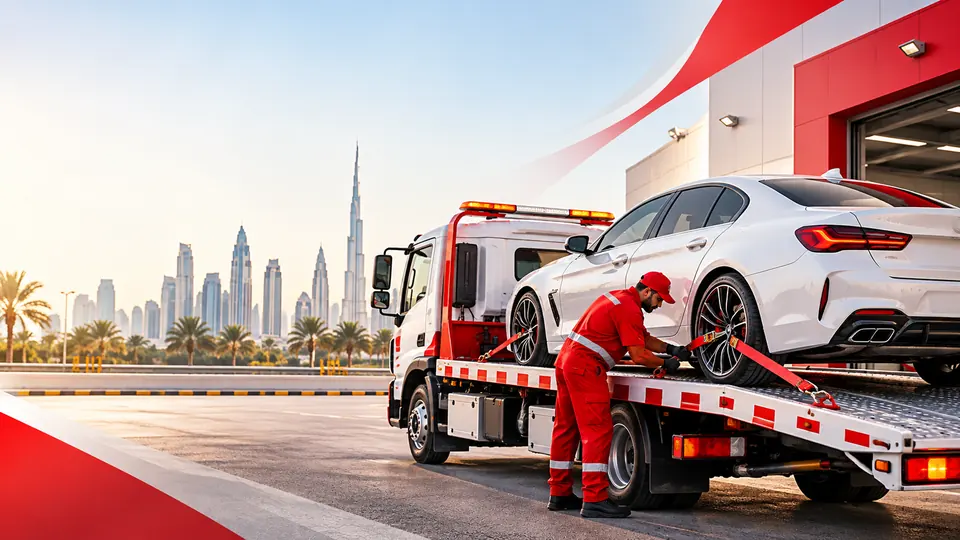
A vehicle may be roadworthy yet need collection on a carrier instead of being driven.
Sharjah car transport enquiries often involve a vehicle bought from a dealership, one awaiting inspection at a workshop, or a car transferred between specialists in different industrial zones. Others involve an unregistered vehicle, a classic car or one that should not be driven after a mechanical fault.
For a flatbed quotation, identify both exact locations, access gates, collection time and the receiving person. Include vehicle model, approximate dimensions, whether the wheels and brakes work and if the key is present. A vehicle locked in a yard without a designated handover contact is not a routine collection.
A sports car with minimal ground clearance needs a different approach from a sedan that rolls freely. A collision-damaged vehicle or one requiring recovery from sand can need a separate stage before it can travel safely on a carrier.
Carrier capacity and loading technique must match the car.
Confirm who may release the car, availability of the key, pickup gate and any required documents or transport permissions. Storage yards may use a different entrance for vehicle carriers.
Low bumpers and underbody components can require a shallower loading angle. Photos of the car and the pickup slope help identify whether suitable ramps are available.
Manufacturers specify different towing and immobilisation procedures. The model, current power state and relevant guidance must be checked before selecting loading and securing equipment.
If steering, wheels or transmission cannot move, additional repositioning and loading equipment may be required. A visual assessment should precede dispatch.
Height, weight and length determine suitability for a carrier. Heavy or oversize vehicles are accepted only where equipment capability and permissions are verified.
Vehicle carrier access depends on workshop entrances and yard operating rules.
A precise workshop gate, contact person and agreed pickup time avoid confusion among neighbouring service bays and industrial streets. Note any vehicle immobilisation before scheduling.
Industrial Area 1 · Industrial Area 6 · Industrial Area 10 · Industrial Area 13 · Industrial Area 15
Larger sites can restrict transporter entry to designated gates and working hours. Coordinate release documents and loading space before sending the truck.
Al Sajaa Industrial Area · Storage yards · Vehicle holding areas
Apartment garages may have height and turning limitations. Share photos of any basement ramp and confirm building access for a carrier.
Muwaileh Commercial · University City vicinity · Al Nahda · Al Majaz
Every route is quoted from real addresses and realistic access conditions.
Provide the specific Dubai destination, whether it is a private garage, dealership or service centre, and its permitted delivery hours. Urban access restrictions can alter the collection plan.
Neighbouring emirates still have distinct pickup and delivery logistics. The shortest map distance does not automatically determine the full transport cost.
Longer journeys are evaluated using vehicle size, destination and any specialist loading requirements. A separate quote is required rather than reusing an urban recovery rate.
These East Coast destinations are part of Sharjah but are not short city transfers. Confirm the actual route, handover site and carrier availability.
Small checks reduce avoidable loading delays.
Add collection and destination details, operating hours and any private-yard entry conditions.
Photograph the car before collection, including wheels and any already damaged surfaces.
Mention non-rolling wheels, locked transmission, low clearance and special manufacturer requirements.
Confirm who will sign for the car and the full quoted amount before transport begins.
Route length matters, but vehicle condition and loading access also affect the quotation.
A freely rolling car collected from an open lot differs from a damaged vehicle located inside a restricted basement. A long-distance transfer, specialist ramp and complex retrieval may each affect the job. Request a quote identifying collection, loading, securing and delivery.
A standard car movement does not automatically include sand extraction, collision lifting or caravan haulage. Keeping these scopes separate helps avoid ambiguous invoices and ensures the correct equipment is requested.
A clear handover protects both the vehicle owner and the carrier.
Workshop staff, dealers and auction yards may need permission or paperwork before handover.
Before-and-after photographs help distinguish pre-existing damage and record the condition at delivery.
Avoid forcing a disabled car to run merely for easier loading or securing it at points not approved by its manufacturer.
Send the essentials together to request a realistic quotation.
Provide both map pins, planned date, workshop or showroom details and receiving contact.
Share make, model, photos and the condition of steering, wheels, brakes and transmission.
State basement height limits, yard access permissions and specific collection or delivery times.
Agree on equipment, included work and full price before confirming the transport.
Common questions about specialist collection and delivery.
A transfer can be assessed after both locations, vehicle model and loading condition are supplied. Availability and price must be confirmed for that request.
Enquiries can be assessed when the collection gate, authorised release contact and operating hours are provided.
The correct method depends on the manufacturer, power state and available equipment; confirm these details before dispatch.
The main recovery page addresses breakdown and towing enquiries; this page concerns planned flatbed shipment, loading and handover.
No fixed rate is advertised. Route, vehicle condition and handling requirements determine the quotation.
Send location pins, photographs, destination and relevant vehicle details to clarify available equipment and a quote before confirming a job.